
Hazardous trees have always posed a unique challenge for homeowners and property managers. Some lean dangerously over rooftops, while others hide internal decay that can turn a calm afternoon into a costly emergency. Many people once relied on basic tools or manual climbing to handle risky removals, but modern demands require a safer, more controlled solution. This is where a specialized crane tree removal service enters the picture—bringing precision, stability, and safety to situations that once felt unpredictable.
As more communities grow, spaces become tighter, and older trees age in unpredictable ways, the need for dependable, methodical tree removal continues to rise. Understanding how this technique works not only helps protect homes but also empowers property owners to make informed decisions without panic or confusion. In this blog, we’ll explore why crane-assisted methods have become indispensable, how professionals navigate complex removals, and what makes the entire process feel efficient rather than overwhelming. Along the way, we’ll also touch on how teams like Veteran Tree Services approach these challenges with experience and thoughtful planning.
What Makes a Tree “Hazardous” in the First Place?
Tree danger doesn’t always announce itself loudly. It may show up as a slight lean that wasn’t there last year or a hollow thud when you tap the trunk. Sometimes the warning is hidden in the root system, where instability grows quietly until a storm exposes the truth. Broken branches, dead tops, fungal growth, and storm damage all contribute to instability—often faster than a property owner expects.
Professionals often rely on detailed inspections, combining experience with diagnostic tools. This is where a professional tree removal service becomes especially valuable. They evaluate weight distribution, potential fall paths, and structural weaknesses that may not be noticeable to the untrained eye. By spotting these indicators early, they reduce the risk of unexpected collapse and help create a safe environment long before heavy equipment ever arrives.
How Does Crane-Assisted Tree Removal Actually Work?
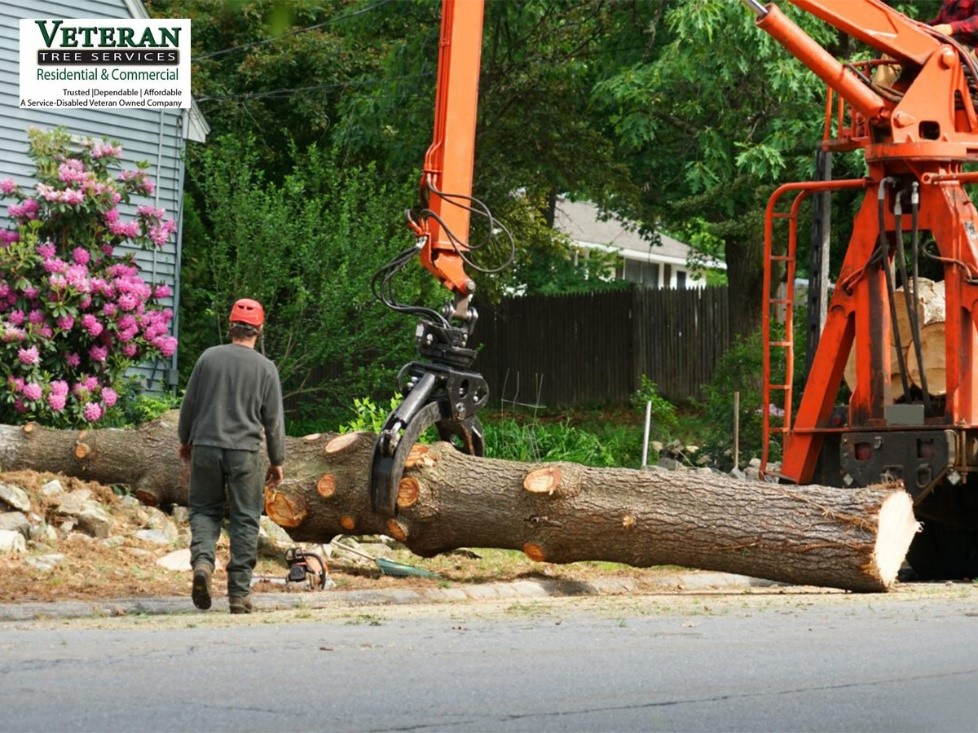
Crane-assisted removal may look dramatic from a distance, but the process is surprisingly calculated. Before any cuts begin, a full site assessment is completed to determine crane placement, access routes, and safety zones. Technicians then communicate continuously, signaling each step to ensure that no movements are rushed or unclear.
The crane lifts sections of the tree—sometimes entire limbs, other times the trunk in controlled segments. This technique removes the need for dropping large pieces to the ground, preventing damage to roofs, fences, vehicles, or landscaping. It also reduces manual cutting time and increases safety for climbers who would otherwise face unstable positions high in the canopy.
At this stage, companies like Veteran Tree Services often coordinate as a team, with cutters, operators, and ground crews working in sync to guide each piece to a secure landing zone.
Why is Crane Removal Safer Than Traditional Climbing Methods?
Traditional climbing works well for healthy, structurally sound trees—but hazardous trees rarely fall into that category. When bark is compromised, or the trunk is weakened, climbing becomes dangerous. A crane supports the tree’s weight externally, meaning the crew does not have to rely on unstable structure.
Crane-assisted removal also allows heavy or awkward limbs to be lifted vertically instead of dropped. This dramatically reduces the risk of unexpected swings, splits, or falls. In many cases, cranes even make the process quicker, which can be particularly important when a damaged tree is located near utilities or fragile structures.
Can Crane Removal Save Money Compared to Manual Removal?
Surprisingly, yes. Although the equipment may look costly, the overall process often saves time and reduces labor requirements. That efficiency translates into better value, especially when hazard levels are high. Homeowners also avoid secondary damage—such as crushed plants, dented roofs, or broken pavement—which can add unexpected expenses after a traditional removal.
Many homeowners exploring an affordable tree removal service eventually discover that cranes help minimize cleanup, prevent accidental property damage, and shorten project timelines.
What Situations Practically Require Crane Assistance?
Crane removal becomes essential when:
- The tree is too unstable to climb
- Large limbs hang over homes or garages
- Storm damage makes manual removal unpredictable
- Trees are growing in tight, inaccessible spaces
- Structures, powerlines, or slopes complicate ground access
- The tree is extremely tall or heavy
Any one of these scenarios can quickly transform a basic job into a hazardous one. Using a crane gives workers the control they need to handle these challenges safely and efficiently.
How Does Crane Removal Protect the Surrounding Landscape?
One of the biggest advantages of crane removal is its minimal footprint. Since large pieces are lifted rather than dropped, the ground expeeriences far less impact. Yards remain intact, gardens stay untouched, and nearby structures remain safe. Even the cleanup moves faster because crane-lifted sections reduce scattered debris and avoid the destructive “free fall” removals of older methods.
Conclusion
Understanding how a crane tree removal service works makes hazardous tree situations feel far more manageable. With safer techniques, strategic planning, and skilled execution, homeowners gain peace of mind knowing risks can be controlled—not left to chance. Teams like Veteran Tree Services demonstrate how thoughtful coordination and modern equipment can transform an unpredictable job into a smooth, secure process. Whether the goal is safety , efficiency, or long-term property protection, crane-assisted methods offer a dependable path forward.